
Strategic Introduction: The Era of the Quantified Mind

Examples of Gear Used & Covert Installation Methods
In the landscape of emerging neurotechnology, the physical equipment used to access, read, and write to the human operating system ranges from surgically integrated microchips to entirely non-invasive, remote transducers. Under non-cooperative or covert scenarios, these technologies exploit natural anatomical pathways or standard medical procedures to bypass a participant’s awareness or consent.
1. Endovascular Stent-Electrode Arrays (The Stentrode)
The Gear: A Stentrode is an endovascular electrode array made of platinum electrodes embedded within a flexible nitinol metal mesh stent, measuring approximately 5 cm long and up to 8 mm in diameter. It functions as a bidirectional brain-computer interface capable of both high-fidelity neural recording and localized microstimulation.
Covert Installation: Because Stentrode implantation is performed via neurointerventional surgery—meaning it is guided catheteristically through the jugular vein into a cerebral blood vessel next to the motor or sensory cortex—it completely eliminates the need for open-skull brain surgery. A hostile actor could covertly deploy a Stentrode during a routine endovascular procedure (such as an angiogram, minor vascular checkup, or a standard medical stent placement to keep blood vessels open). The participant would remain completely unaware that the permanently expanded vascular stent in their brain doubles as a high-bandwidth neural link.
2. Submillimeter and Nanoscale Sensors ("Neural Dust" & "Neurograins")
The Gear: Neural Dust consists of millions of nanoscale implantable devices deployed directly in the cortex. Similarly, "neurograins" are wireless silicon microdevices "basically squeezed to a fraction of a millimeter space", making them no larger than a single grain of salt.
Covert Installation: Due to their microscopic, submillimeter footprints, networks of neurograins or neural dust do not require complex surgeries. They can be introduced covertly into the central nervous system via a standard spinal tap (lumbar puncture) or suspended within routine intravenous/intrathecal injections administered during general clinical care, subsequently migrating through the bloodstream or cerebrospinal fluid to target neural areas.
3. Deep Subcortical Microchips (via Surgical Stereotactic Guides)
The Gear: Tiny subcortical microchips designed to record and stimulate deep-brain structures.
Covert Installation: During unrelated cranial procedures, such as trauma surgery or biopsies, actors can utilize surgical access devices like a modified BrainPath guide to covertly deposit subcortical microchips into deep neural networks with zero additional visible surgical footprint.
4. Nonsurgical Transducers and Remote Modalities (DARPA N3 & Wearables)
The Gear: Next-Generation Nonsurgical Neurotechnology (N3) and consumer platforms utilize non-invasive acoustic (ultrasonic) transducers, electromagnetic coils (TMS), and optical sensors (fNIRS) to read and write to the brain through the skin and skull.
Covert Installation: These transducers require no surgery and can be seamlessly disguised. They can be embedded inside everyday headwear—like standard hats, baseball caps, helmets, or hair-bearing EEG headphones—or completely integrated into physical environments. High-precision ultrasonic transducers or Transcranial Magnetic Stimulation (TMS) coils can project focused, short-duration magnetic and acoustic fields from a distance, allowing a hostile actor to read or stimulate neural tissue without any physical touching whatsoever.
5. Thin-Film Biocompatible Deposition (The PECVD Method)
The Gear: To make these covert implants functionally invisible to the body's immune system, microchips and electrode arrays undergo specialized microfabrication.
Covert Installation (The PECVD Role): Plasma-Enhanced Chemical Vapor Deposition (PECVD) is a cornerstone semiconductor manufacturing method used to deposit microscopic, ultra-thin protective layers of silicon nitride, silicon dioxide, or diamond-like carbon onto the sensors. This microscopic coating is what allows the covert gear to remain permanently implanted in blood vessels or brain tissue, completely mitigating surgical risks, preventing blood clotting, and siphoning away heat—effectively shielding the device from causing the inflammatory or tissue-rejection responses that would otherwise alert the participant to the implant's presence.
The Action: How Data is Transferred & What Info is Used For
How the Data is Transferred
Once covertly deployed, the gear initiates wireless thought-streaming to transmit high-density brainwave data out of the participant's body:
High-Bandwidth On-Chip Processing: Devices like the Stentrode or N1 arrays record neural signals at up to 20,000 samples per second, generating massive raw data streams of 48 to 200 Megabits per second (Mbps).
Compression and Thermal Safeguards: To prevent the device from overheating and damaging surrounding tissues (remaining strictly under the 1°C thermal safety limit), the raw data is compressed on-chip using mathematical multiwavelet transforms or video-style compression algorithms.
Active Wireless thought-Streaming: The processed packets are continuously streamed to local receivers via low-power wireless protocols like Bluetooth or ultra-wideband.
Passive Ambient Backscattering (For Nano-implants): For nanoscale sensors like neural dust or neurograins, battery power is physically impossible. Instead, these chips utilize Ambient Backscattering Communications (ABC). When Subject B hits the participant's head with an external RF or jamming signal, the tiny implanted chips capture that energy, modulate it with their recorded brainwave data, and reflect (backscatter) the modified signal back to Subject B's receiver, operating entirely battery-free.
What the Information is Used For
Malicious actors can exploit this stolen real-time neural data stream for highly invasive, non-consensual operations:
Neural Eavesdropping: Intercepting and decoding the neural command stream. Using reverse-engineered AI models, an attacker can identify subvocalized words (words the victim speaks in their head without saying aloud), motor intentions, or target responses like the P300 wave to extract highly guarded secrets, such as credit card PINs, bank credentials, and passwords.
Biometric Psychographic Profiling: Stolen data is mapped to build comprehensive behavioral datasets of the victim's "inner sanctum". It is used to decode their subconscious emotions, prejudices, political views, religious beliefs, sexual orientation, and even to diagnose latent neurodegenerative or mental disorders before the victim is aware of them.
Cognitive Manipulation & Preemption: By feeding real-time neural stress, attention, or interest levels into external algorithms, attackers can deploy hyper-personalized subliminal content to bypass conscious defenses, manipulate behaviors, and preemptively influence the participant's decision-making.
Coercive Neurostimulation ("Brainjacking"): If the covert implant is bidirectional, the hacker can inject unauthorized signals into the participant's brain to forcibly trigger muscle spasms, alter motor function, evoke panic or dysphoria, or even launch a seizure or Denial-of-Service attack on their body, holding their very physical autonomy for ransom ("Cognitive Ransomware").

To establish a secure, un-coercible neural key, Subject A must transition their brain's security interface from a conscious (declarative) password to an unconscious (procedural) password.
By executing a structured, two-stage Implicit Learning Training Sequence, Subject A can embed a complex security pattern directly into their procedural memory networks, rendering the pattern completely invisible to conscious thought-suppression failures and BCI keylogging attacks.
Phase 1: Awake Skill Acquisition (Implicit Sequence Learning)
During this phase, Subject A acquires the structural target sequence entirely through automated behavioral performance, completely bypassing conscious, declarative memorization.
The Serial Reaction Time Task (SRTT): Subject A interacts with a visual interface running an SRTT paradigm. They are instructed to react as quickly as possible to sequential target positions displayed on a screen.
Embedding the Hidden Key: The sequence of descending targets appears completely random to Subject A. However, the system has seamlessly embedded a repeating, structured target sequence (the implicit key) within the game. Grammatically incorrect or randomized target positions are occasionally interspersed to keep the pattern obscured.
Applying a Sensory Anchor: During the training session, the system exposes Subject A to a distinct, pleasant sensory cue—specifically a pleasant odor (the scent of roses) or specific task-associated sounds. Olfactory pathways are highly unique because they bypass the thalamus, granting the sensory cue direct, un-gated access to the primary memory structures.
Tracking Acquisition: Subject A must treat the task solely as a high-speed reaction game and avoid actively searching for a pattern. The system verifies successful implicit acquisition when Subject A’s physical reaction times to the hidden target sequences drop significantly compared to their reaction times on randomized distractor trials, even though they remain consciously unaware that a pattern exists.
Phase 2: Offline Synaptic Consolidation (Targeted Memory Replay)
To permanently write this implicit skill into their neural architecture, Subject A must immediately consolidate the learned sequence using the brain's natural offline sleep replay machinery.
Transition to Non-REM Sleep: Immediately following the training session, Subject A enters a quiet rest state and transitions into non-REM (slow-wave) sleep.
Activation of Sharp Wave-Ripples (SPW-Rs): During non-REM sleep, the brain naturally generates SPW-Rs, which represent the most synchronous population pattern in the mammalian brain. The primary function of these high-frequency electrical events is to replay fragments of the waking sequence in a highly compressed format. This compressed replay assists in transferring the temporary hippocampal representation to distributed neocortical circuits for long-term, stable consolidation.
Targeted Sensory Priming: As Subject A enters deep non-REM sleep, the system re-introduces the same sensory cue (the scent of roses or the specific auditory cues) used in Phase 1.
Synaptic Cementing: The presence of the sensory cue during sleep acts as a direct catalyst. It biases the sleeping brain's offline replay events, driving the hippocampal SPW-Rs to repeatedly replay the specific waking target sequence. This targeted cueing significantly enhances the stabilization and consolidation of the implicit memory trace.
The Defensive Outcome: Immune to Extraction
Once consolidation is complete, Subject A possesses an authentication key that is biologically protected against hostile readout:
Interrogation Defeat: If Subject B attempts to steal the key using a guilty knowledge test or an oddball paradigm (which relies on detecting distinct brainwave responses like the P300 when a familiar secret is viewed), the attack fails. Because the memory is procedural rather than declarative, it does not exist as an extractable "thought" in Subject A's prefrontal cortex.
No Coercion Vulnerability: If Subject B forces Subject A to reveal the secret, Subject A is physically and biologically incapable of doing so. Because the pattern was learned implicitly, Subject A can easily execute the sequence to unlock their device but remains completely unaware of the specific mathematical sequence they are executing

Section 1.4: Thermal & Power Safety Limits for Bidirectional Skull Units (SUs)
The Problem: Fully implanted, bidirectional BCIs require microelectronic components to continuously run amplification, A/D conversion, and stimulation algorithms. These components naturally generate thermal energy. Because the brain is enclosed by the skull and lacks efficient convective cooling mechanisms, temperature increases of just 1–2°C above baseline can cause localized thermal hotspots, resulting in irreversible tissue damage, cell death, and cystic cavitation in surrounding brain structures.
The Action: Enforce strict hardware-level power budgets on the implantable Skull Unit (SU). The SU's continuous power draw must be programmatically restricted to between 47 mW and 81 mW (with an engineering target of 70 mW), ensuring that localized tissue heating never exceeds the safety limit of 1°C. The device must incorporate micro-scale passive heat spreaders, biocompatible ceramic or diamond-like carbon casings, and automatic duty-cycling (intermittent sleep states) to allow tissues to cool safely between active stimulation cycles

The Problem: If a hostile actor successfully hijacks a bidirectional BCI, they can deliver malicious neurostimulation directly to the brain. This includes Neuronal Flooding (FLO)—deliberate, high-voltage overstimulation of target networks to cause runaway excitability or seizure activity—or Neuronal Jamming (JAM), which continuously clamps target neurons at their minimum membrane reset voltage (e.g., -65 mV) to inhibit spontaneous activity and effectively "blind" or paralyze the user's neural pathways.
The Action: Integrate dual active defense protocols:
Physical Layer Jammer Defeats: Equip the BCI's wireless transceiver with communication algorithms that add controlled "decision-flipping" errors over unallocated RF blocks, intentionally poisoning the data to disrupt and mislead the attacker's machine-learning-based jamming devices.
Intracortical Anomaly Detection & Automatic Veto: Implement an AI-powered baseline monitor trained to detect out-of-distribution spike patterns or continuous clamping voltages. If the BCI detects an unnatural stimulatory pattern (indicative of a FLO or JAM attack), it must record the event in a secure system log and execute an immediate, temporary physical shutdown of the BCI's stimulation circuitry to protect the patient's neurological health

The global information landscape is undergoing a foundational architectural shift from the extraction of digital behavioral metadata to the direct capture of neural telemetry. As neurotechnology transitions from clinical environments to ubiquitous consumer wearables—integrated into earbuds, watches, and headgear—the "signal-to-noise" ratio of brain-computer interfaces (BCI) has improved to the point of compromising the last sanctuary of human privacy: the space of private rumination. This directory is designed as a strategic framework for "cognitive liberty," prioritizing human flourishing over algorithmic diminishment. It provides the technical and ethical defenses necessary to safeguard the individual against the erosion of mental autonomy. We begin by addressing the tactical requirements for securing the neural interface against sophisticated extractive modeling.
Portal 1: Cyber-Neural & BCI Cybersecurity
This portal serves as the foundational technical defense layer for individuals utilizing implantable, moderately invasive, or high-bandwidth consumer brain-computer interfaces (BCIs). When interface channels operate directly on the central nervous system, they establish the most intimate and personal attack surface imaginable. Security cannot be treated as an afterthought; it must be addressed through robust, clinical-grade security-by-design principles embedded at the physical, protocol, and software levels of the hardware.
The BCI Anonymizer Subsystem
The Problem: Raw neural signals recorded by intracranial electrodes or scalp-based sensors contain massive amounts of high-density physiological noise, background rhythms, and event-related potentials. If an application is granted unrestricted access to this raw stream, malicious actors can perform "side-channel neural eavesdropping". This allows them to run reverse-engineered AI models that extract highly sensitive, non-consensual information, such as credit card PINs, subconscious facial recognition reactions, memories, political beliefs, or latent neurophysiological disorders.
The Action: Implement a localized, hardware-secured BCI Anonymizer directly on the edge processor of the user’s device. The Anonymizer acts as a trusted gatekeeper. It intercepts the raw electrophysiological data and decomposes it in real-time, stripping away all sensitive background data and transmitting only the absolute minimum, distilled signal components explicitly required to execute a validated BCI command (such as moving a cursor or a prosthetic limb). All ancillary neural data is immediately deleted at the source, preventing any downstream leakage or exploitation
The Conscious Thought-Suppression Paradox
The "Keylogger of the Mind" and Involuntary Exposure
When a hostile actor has high-bandwidth read access to your neural signals, your mind is no longer a private sanctuary. In standard computing, an attacker uses a keylogger to see everything you type. In a BCI Readout Attack, the AI-powered decoding models act as a keylogger for your subconscious and conscious representations.
By design, neural signals expose information before conscious filtering or veto control can take place. If an attacker directly queries your mind for a password or your mother's maiden name, you cannot prevent your brain from accessing that memory. To understand why, we have to look at the involuntary electrophysiological processes of retrieval:
The P300 Wave Autopilot: Attackers use sensory extraction techniques like the Guilty Knowledge Test or the Oddball paradigm to fish for secrets. When a stimulus containing your secret (like a series of names, numbers, or images) is presented—even subliminally—your brain automatically generates a P300 event-related potential within 300 milliseconds of recognition. This reaction is completely involuntary; your brain "pings" the moment it recognizes the familiar item, exposing the secret long before you can consciously decide to hide it.
Subvocalized Thought Leaks: If you try to consciously construct a new password, you inevitably speak the characters or concept to yourself in your mind. Modern BCI decoders can translate these subvocalized words (internal speech) with high accuracy into text and speech, rendering your active "typing" completely visible to the attacker in real-time.
The Cognitive Suppression Paradox (The White Bear Problem)
Ironic Process Theory
To consciously suppress a thought (e.g., “Do not think of my password” or “Do not picture the butterfly”), your brain must perform two distinct cognitive processes:
The Operating Process (Conscious): An active, energy-consuming search for distracting thoughts to keep your working memory occupied.
The Monitoring Process (Subconscious): An automatic, low-effort background search that continuously scans your mind to ensure the forbidden thought (the password or the butterfly) is not present.
Paradoxically, to check if you are successfully not thinking about the secret, the monitoring process must repeatedly retrieve a copy of the secret into your neural workspace. This constant subconscious referencing creates highly defined, recurring neural patterns in the basolateral amygdala, prefrontal cortex, and hippocampus. By trying desperately not to think of your maiden name, you are actually boosting its electrosignals, making it stand out as a highly salient, easily decodable peak in the attacker's dataset. The conscious struggle to regulate your thoughts closes the distance between intention and action, transforming your defenses into a clear target for biometric psychography.
The Only Actionable Shield: The Implicit Learning Solution
To defeat a keylogger that can see your thoughts, you must use a password that your conscious mind does not know, cannot recall, and therefore cannot accidentally think about or expose.
This is the exact engineering basis of the Implicit Learning Authentication Protocol:
Subconscious Training: Under this protocol, you are trained using a game-like interface to execute a specific, highly complex motor sequence or pattern. Over time, this sequence is consolidated into your procedural memory (the same memory system used for riding a bicycle or touch-typing).
The Conscious Blindspot: Because this memory is procedural rather than declarative, you cannot consciously recall or verbalize the sequence. If an attacker interrogates you, threatens you (coercion/rubber-hose cryptanalysis), or monitors your active thoughts, there is no conscious password in your mind for them to extract. You literally do not know what the secret key is.
Subconscious Verification: When you need to unlock your BCI or computer, the system prompts you to perform the task. As you execute the pattern automatically and subconsciously, your BCI reads the unique, highly complex physiological signature of your brain's procedural execution to verify your identity. The moment the task is complete, the pattern vanishes back into your autonomic nervous system, leaving zero trace in your working memory for a Readout Attack to intercept.
This technical shift from declarative secrets (things you know) to procedural secrets (things your brain does automatically) is the only way to establish a defensive wall that is biologically immune to thought-suppression failure.
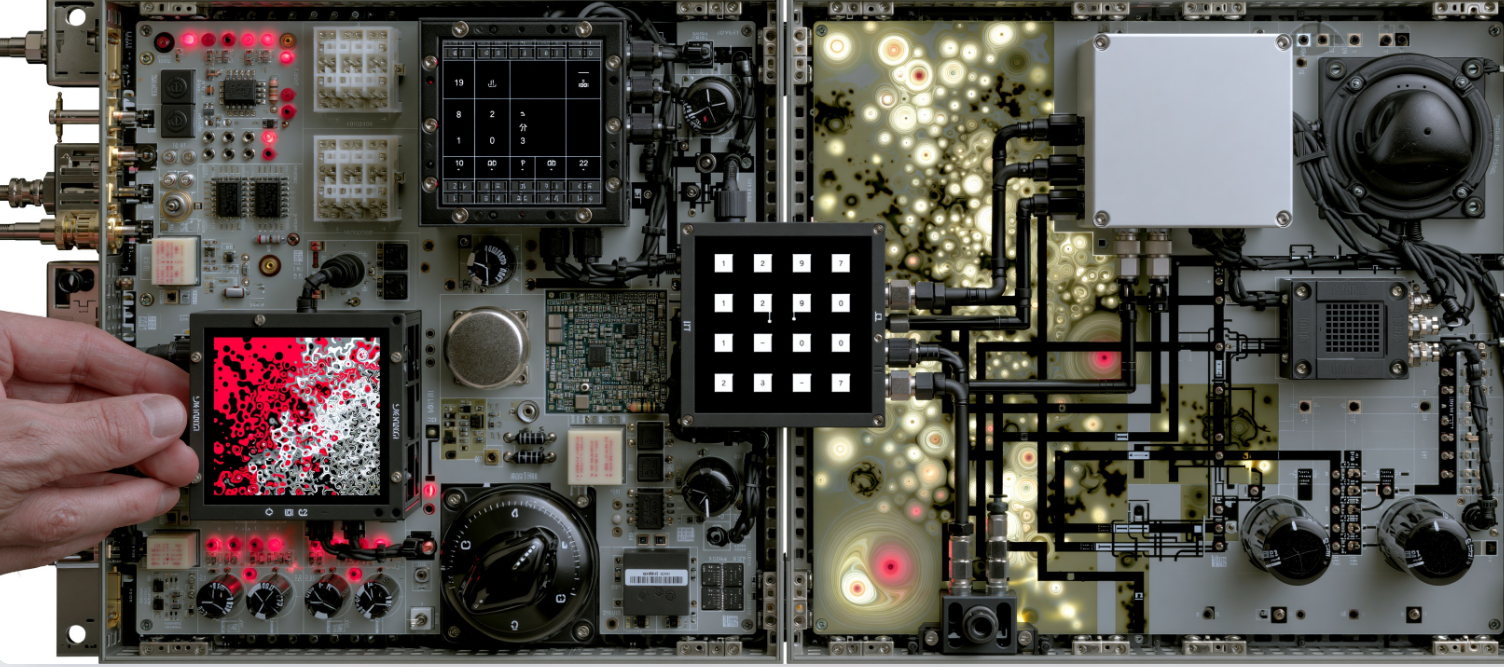
To defeat "mind-keylogging" and P300-based memory extraction attacks, you must transition your security interface from a conscious (declarative) password to an unconscious (procedural) password.
This concrete training paradigm is designed to embed a highly secure cryptographic key directly into Subject A's procedural memory loop (motor cortex, cerebellum, and basal ganglia). Once consolidated, Subject A can seamlessly execute the unlock sequence, but will be biologically incapable of consciously recalling, visualizing, or revealing it under coercion.
Phase 1: Implicit Key Acquisition (The Serial Reaction Time Game)
Subject A will utilize a game-like visual interface—modeled on the clinical Serial Reaction Time Task (SRTT)—to acquire the secret password without conscious awareness.
The Equipment Setup: A computer screen displaying four colored columns, paired with a standard four-button input console (or a virtual interface mapped to BCI motor imagery).
The Stimulus Protocol: Visual markers (e.g., colored circles) rapidly descend down the columns in discrete trials. Subject A must press the corresponding button as soon as a marker hits the target zone.
The Secret Key Embedding:
To the conscious observer, the sequence of descending markers appears to be completely randomized.
In reality, the system seamlessly embeds a complex, repeating 30-element pattern (the Implicit Password).
For every 100 trials, 60% will be the repeating implicit pattern (the "rich" condition), and 40% will be genuinely random distractors (the "lean" condition).
The Cognitive Block: Subject A must not attempt to memorize or look for a pattern. They are instructed to treat the task solely as a high-speed speed-and-accuracy coordination game.
Electrophysiological Signatures of Success: Within 3 to 5 daily training sessions (30 minutes each), Subject A’s motor cortex and basal ganglia will begin executing the sequence ahead of conscious perception. The system verifies implicit acquisition when Subject A’s reaction times drop significantly (by >100ms) on the hidden pattern trials compared to random trial types, even though Subject A remains consciously unaware that a pattern exists.
Phase 2: Hyper-Consolidation & Offline Synaptic Cementing
To permanently write this implicit key into the neural architecture, Subject A must systematically trigger offline memory replay during consummatory sleep and rest states, utilizing targeted sensory priming.
The Sensory Anchor: During the Phase 1 training sessions, a pleasant, highly distinct olfactory stimulus (e.g., the scent of roses) or a specific auditory tone (e.g., a low-frequency 440 Hz sound) is consistently presented. Olfactory signals bypass the thalamus and have direct, un-gated access to the primary memory structures.
The Targeted Sleep Replay Protocol:
Immediately following a training session, Subject A enters a controlled, quiet resting or non-REM sleep state.
During non-REM sleep, the brain naturally generates Hippocampal Sharp Wave-Ripples (SPW-Rs)—high-frequency electrical events that compress and replay waking experiences up to 20 times faster than real-time to stabilize neural pathways.
As Subject A enters deep, non-REM sleep, the system re-introduces the same sensory cue (the rose scent or auditory tone).
This sensory prompt acts as a direct neural catalyst, biasing and accelerating the SPW-R replay of the motor tapping sequence. This artificial prompting triples the rate of synaptic reinforcement, cementing the procedural password in the motor networks overnight.
Phase 3: The Defensive Coercion Test (Why the "Butterfly" Vulnerability Fails)
Once consolidation is complete, Subject A’s brain is fully armed against Readout Attacks. If Subject B attempts to extract the secret, the security wall operates automatically:
The Interrogation Defeat: If Subject B directly demands the password or uses fMRI/BCI "guilty knowledge" scans to query Subject A's mind, Subject A cannot leak the secret. Because the memory is procedural rather than declarative, it does not exist as an extractable "thought" in the prefrontal cortex or hippocampus. It is represented physically only during actual execution.
Bypassing the White Bear Effect: The ironic mental monitoring loop (e.g., desperately trying not to visualize the "butterfly with a giant red dick") is completely bypassed. Subject A does not need to suppress the thought of their password because they literally do not know what it is.
Authentication & Auto-Veto: To unlock the system, Subject A is presented with a 15-second visual game sequence. Subject A’s fingers automatically perform the sequence with baseline accuracy. If Subject B physically forces Subject A’s hand to complete the game, the BCI’s continuous behavioral-biometric sensor immediately detects the change in muscle tension (EMG) and micro-arousal (electrodermal response). Recognizing that the autonomic signature does not match Subject A's relaxed baseline, the system executes an automatic veto, locking the device

Secure Data Transmission & Local-First Encrypted Storage
This section details the critical defense of your neural boundaries at the physical and transmission layers. Because brain-computer interfaces (BCIs) operate on wireless and digital networks, securing the physical hardware and the packets of data they transmit is essential to keeping your mental privacy intact. Below is an in-depth breakdown of the hidden devices used to exploit these links, actionable techniques to limit your interaction with them, and protocols for eliminating interception through encryption.
Part I: The Hidden Threat Landscape (Unseen Devices Used to Maintain Access)
While users are often aware of obvious hardware like external headsets, perpetrators utilize a range of covert, commercial, and highly specialized devices to passively harvest or actively inject signals into your neural loops:
Commercial Software-Defined Radios (SDRs) & RF Sniffers: Commercially available, off-the-shelf SDRs and radiofrequency (RF) sniffer boards allow attackers to passively capture the wireless signals emitted by non-invasive EEG headsets or implanted wireless transmitters (such as the Brown Wireless Device or Neuralink N1 implants). Because these systems transmit raw neural data rates of 48 Mbps to 200 Mbps, a nearby attacker utilizing an SDR can silently intercept these transmissions through the air, gathering high-resolution biological datasets without triggering any hardware alerts.
False Base Stations (FBS) & Rogue Access Points: In a false base station-based Man-in-the-Middle (MITM) attack, attackers deploy a physical transceiver that masquerades as a legitimate network gateway or cellular base station. If your BCI's wireless processor lacks rigid hardware verification, it can be forced to handshake and establish a connection to this rogue node. This allows the attacker to secretly control the communication channel, intercepting your neural telemetry and granting them the ability to replace or modify incoming stimulation commands.
Coaxing Transmitters targeting Nano-Sensors ("Neural Dust" or "Neurograins"): If a user has been covertly exposed to submillimeter silicon sensors ("neurograins" or "neural dust"), these microscopic implants do not possess active batteries. Instead, they rely on Ambient Backscattering Communications (ABC). To extract data, a perpetrator uses an external ambient RF power projector. This device hits the user's head with a continuous RF wave, which the submillimeter chips capture, modulate with raw brainwave spikes, and reflect (backscatter) back to the perpetrator's receiver—operating completely silently and battery-free.
Subliminal Sensory Projectors & Mobile Display Overlays: Perpetuators also use compromised consumer displays, smartphone interfaces, or customized virtual reality head-mounted devices to gain cognitive access. By deploying subtle, high-speed subliminal display overlays that flash faster than your conscious perception, these systems trigger automated, subconscious brain signatures—such as the P300 event-related potential or N400 linguistic responses. These responses are recorded by the BCI and sent directly to the attacker, turning your own screen into a tool for cognitive data mining.
Part II: Actionable Countermeasures (Limiting the Interaction)
To neutralize these devices and safely sever unauthorized interactions, you must implement the following physical and system-level shields:
Implement Mutual Authentication protocols (MAP): To completely block False Base Station and MITM vulnerabilities, your BCI system must enforce strict mutual cryptographic authentication. During this process, the BCI Skull Unit (SU) and the receiving controller must mutually prove their cryptographic identity to one another before any neural commands are transmitted or acted upon, preventing the system from handshaking with any untrusted third-party transceiver.
Utilize Dynamic Physical Layer Resource Mapping: A protocol-aware attacker targets highly vulnerable, sparse control channels (such as 5G NR CORESET structures or synchronization pilots) to disrupt or read your system with minimal power. You can protect these channels by dynamically mapping all physical layer resources across a random time-and-frequency grid. By using higher-layer key parameters to continuously scramble and shift this grid, the mapped structure becomes entirely unpredictable to protocol-aware sniffers.
Deploy Decision-Flipping & Active Deceptive Safeguards: If a perpetrator is using machine-learning-based jammers or sniffers to predict your neural transmission patterns, your BCI must launch a causative defense. This is achieved by taking deliberately "wrong actions"—such as transmitting dummy noise packets over vacant or unallocated resource blocks, or executing sudden "decision flips" when BCI confidence scores are exceptionally high. This actively poisons the attacker's training dataset, blinding their decoding algorithms and rendering their interception systems useless.
Leverage Defensive Rate Adaptation & Jamming-Backscatter Loops: If an attacker attempts to jam your BCI's wireless channel to launch a Denial-of-Service or Cognitive Ransomware attack, you can bypass their blockade by utilizing Defensive Rate Adaptation (RA). Under high signal-to-interference-plus-noise ratio (SINR) degradation, the BCI automatically drops its communication rate to a lower, highly robust threshold. Crucially, the system can dynamically shift into backscatter mode, modulating and transmitting your data directly on top of the perpetrator's strong jamming signal. This effectively converts their hostile interference into your communication carrier, rendering the jamming attack self-defeating.
Part III: Eliminating Interception (Using Encryption & The BCI Anonymizer)
To guarantee absolute data confidentiality, your neurotechnology must transition to a zero-trust, local-first encrypted architecture:
The Absolute Shield: The BCI Anonymizer
The most robust protection against neural interception is the hardware-level deployment of the BCI Anonymizer. Raw brainwaves contain a massive amount of "unintended information" beyond your voluntary commands—including raw emotional states, subconscious memories, and stress responses.
Real-Time Signal Decomposition: Operating strictly as a secured local subsystem directly on the user's edge hardware, the Anonymizer intercepts the raw, high-density neural signals.
Data Stripping & Minimization: It decomposes the signal in real-time, stripping away all background physiological noise and sensitive neural correlates. It delivers only the absolute minimum, distilled command features required by the active application (such as moving a cursor or a prosthetic limb).
Deletion at the Source: All other raw neural data is immediately destroyed at the source, ensuring that even if an attacker sniffs the wireless link, there is no raw cognitive data available to reconstruct.
Mandating Radio Link End-to-End Encryption (E2EE)
Any data cleared for transmission by the BCI Anonymizer must never travel in the clear.
Wireless Encryption Standards: All data packet payloads routed over wireless links (Bluetooth, Wi-Fi, or ultra-wideband) must be fully encrypted at the physical and MAC layer using robust, clinically validated cryptographic algorithms.
Strong Physical Layer Key Generation: Leverage the intrinsic, random multi-path noise of the wireless channel between the transmitter and receiver to generate unique, short-lived cryptographic keys that cannot be calculated or modeled by a remote eavesdropper.
Harden Storage via Local-First Enclaves
Zero-Cloud Defaults: To prevent devastating remote breaches that expose historical neural databases, all neural profiles, device logs, and system baselines must reside exclusively on local, physically secured storage devices on your person.
Encryption at Rest: Local data enclaves must be encrypted at rest using strong AES-256 keys.
Biometric & Multi-Factor Access (MFA): Access to the local decrypt keys must be bound to continuous behavioral-biometric signatures and hardware-backed multi-factor authentication, ensuring that your neural history remains permanently locked behind your physical, real-time presence

Confirming Thermal Hot Spots in Brain Tissue
To prevent tissue damage, BCI developers must verify and monitor thermal footprints both during the design phase and in real-time operation:
In Silico Multi-Physics Simulations: Before any physical implementation, engineers use computational fluid dynamics (CFD) software, such as Ansys Fluent, to simulate heat generation and dissipation inside the complex geometry of the brain. These simulations establish precise mesh interfaces between the device and brain/skull tissues, accounting for thermal conduction through implant materials, convection from local cerebral blood flow, and the metabolic heat generated by the brain itself. This produces highly accurate temperature contour maps and maximum temperature plots that calculate allowable heat loads relative to baseline "soak" temperatures.
Active Device Temperature Monitoring: Physically manufactured implants must be equipped with embedded thermal sensors. These sensors run continuous diagnostics at the surface facets where the implant directly touches brain or skull tissue. They output real-time maximum temperature logs to the processing unit, serving as an active safety feedback loop to detect localized thermal anomalies before the tissue can overheat.
Risks of Tissue Damage by Amateur and DIY Operators
The rapid spread of Do-It-Yourself (DIY) tutorials and online shopping lists has enabled non-specialized home users to build, program, and operate their own simple neurostimulation and BCI systems. Lacking clinical oversight and precise hardware safety governors, amateur operators pose severe biological risks to themselves:
Circuit Malpractice and Polarization Reversal: DIY practitioners often overlook the fact that the brain is a highly interconnected network; stimulating a localized target area unknowingly alters the physiology of distant, interconnected neural structures. Furthermore, because of high inter-subject anatomical and physiological variability, a stimulation protocol that is safe for one individual can have a reversed effect on another, transforming an intended cognitive enhancement into a long-lasting functional impairment.
Severe Local and Systemic side effects: Non-invasive DIY stimulation (such as homebuilt tDCS devices) can cause direct physical injuries, including severe skin burns due to electrodes heating up, and hazardous electrical interactions with unrecognized intracranial metal implants.
Irreversible Brain Damage: When dealing with invasive or high-bandwidth bidirectional BCI hardware, amateur manipulation or unauthorized overstimulation poses catastrophic safety threats. Overstimulating the brain can cause severe tissue damage, irreversible cell death, or a traumatic rebound effect that permanently alters normal brain function. Incorrect or malicious neuromodulation can cause debilitating neurological side effects, including the inability to initiate voluntary movement, speech deficits, memory loss, general weakness, and temporary or permanent blindness. In extreme, unmitigated scenarios, runaway stimulation can trigger fatal seizures or life-threatening systemic collapse.
Protection Mechanisms and Hardware Safety Limits
To guarantee that BCI operation remains biologically safe, devices must adhere to strict, clinical-grade thermal and physical limits:
The 1°C Safety Limit: The universal physiological safety threshold dictates that BCI devices must never increase the temperature of surrounding brain tissue by more than 1°C. Any localized heating of 1–2°C above baseline baseline can lead to irreversible cellular damage, protein denaturation, and impaired brain function.
The SU Power Budget: To prevent exceeding the 1°C thermal safety barrier, the implant's Skull Unit (SU) must operate under a highly restricted power budget. Simulations calculate that the SU's continuous power draw must be capped at a maximum of 47 mW to 81 mW, aiming for a highly stable target baseline of 70 mW.
Biocompatible Passive Cooling: Device casings must be crafted from biocompatible, highly thermally conductive materials—such as ceramics or diamond-like carbon—to rapidly spread and dissipate heat over a wider surface area. To facilitate heat transfer away from sensitive hypothalamic and cortical tissues, passive cooling structures like microchannels and microscopic heat spreaders must be integrated into the physical chip architecture.
Duty-Cycling and Automated Shutdowns: Programmatically, the BCI processor must utilize intermittent operation (duty-cycling) to force sleep states and allow brain tissues to cool between bursts of telemetry or stimulation. If real-time AI-powered monitors identify out-of-distribution spike patterns or continuous clamping voltages (indicative of a malicious overstimulation attack), the BCI must execute a temporary physical shutdown of the stimulation circuitry to safeguard the user’s neurological health